In the realm of modern architecture, the challenge of limited square footage is becoming increasingly prevalent. As urban populations swell and the cost of land rises, architects are being called upon to perform a kind of spatial alchemy: the art of making a physically small area feel significantly larger, more open, and more luxurious.
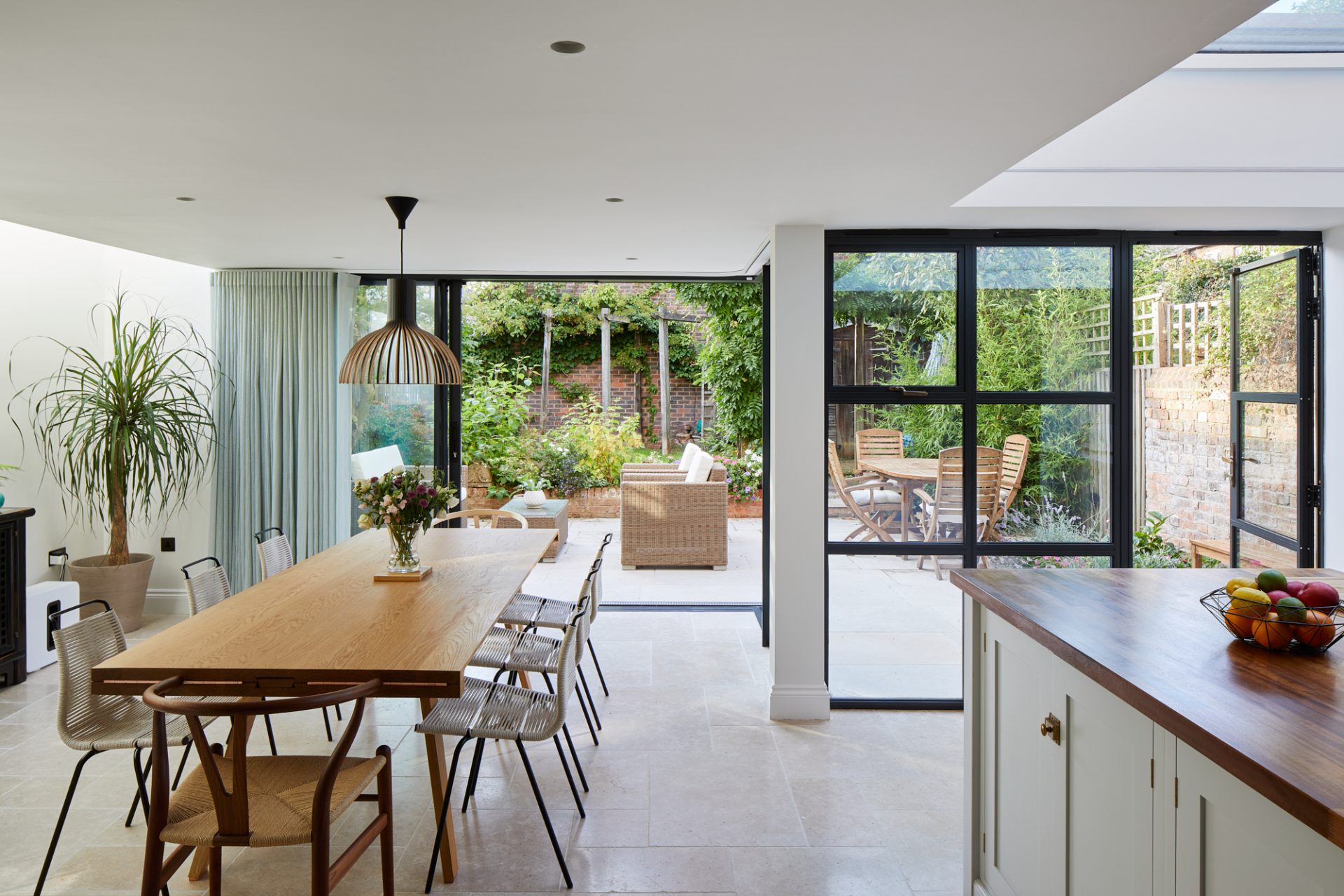
True space expansion is not about moving walls; it is about manipulating human perception. The brain interprets space based on light, sightlines, and the continuity of materials. By understanding these psychological and physical triggers, we can employ specific architectural strategies to transform a cramped environment into an expansive sanctuary. Here is an in-depth exploration of the most effective strategies for expanding space.
1. The Power of Uninterrupted Sightlines
One of the most fundamental principles in expanding perceived space is the management of sightlines. When a person enters a room, their subconscious immediately calculates the distance to the farthest visible point. If that gaze is interrupted by a wall, a large piece of furniture, or a dark corner, the room feels small.
Open-Plan Connectivity
The removal of non-structural interior walls is the most direct way to expand a floor plan. By merging the kitchen, dining, and living areas into a “Great Room,” architects allow the eye to travel across the entire width or length of the building. This connectivity suggests a scale that far exceeds the actual measurements of the home.
Strategic Internal Openings
If total open-plan living is not desired due to privacy needs, architects can use internal windows or “cut-outs” in walls. These openings allow light to pass between rooms and provide a glimpse of the space beyond, preventing the “boxed-in” feeling common in traditional layouts.
2. Vertical Expansion and Volumetric Design
Space is often measured in square feet, but it is experienced in cubic feet. The volume of air above our heads has a profound impact on how we feel within a structure.
High Ceilings and Double-Height Voids
Increasing the ceiling height—even by just a foot or two—can change the entire atmosphere of a room. In modern designs, double-height voids are often placed in social areas. By creating a vertical axis, the architect draws the eye upward, making the footprint of the room feel secondary to its overall volume.
Clerestory Windows and Skylights
When wall space is needed for storage or privacy, clerestory windows (placed high near the roofline) can be used to bring in sunlight while keeping the lower walls solid. Similarly, skylights illuminate the center of a room—areas that are usually the darkest—creating an airy, “outdoor” feel that effectively dissolves the ceiling’s boundaries.
3. Transparency and the Borrowed Landscape
The “Borrowed Landscape” is a traditional Japanese architectural technique (Shakkei) that is more relevant today than ever. The idea is to incorporate the view of the outdoors into the interior design, effectively “borrowing” the garden, the sky, or the streetscape to add to the home’s square footage.
Floor-to-Ceiling Fenestration
Large glass panels act as invisible walls. When a living room features a floor-to-ceiling glass wall that looks out onto a patio, the eye does not stop at the glass; it travels to the fence or the trees outside. This creates a visual extension of the floor, making the outdoor space feel like part of the interior room.
Corner Glass and Seamless Thresholds
Removing the solid corner of a building and replacing it with glass is a high-impact strategy. It eliminates the “enclosure” point where two walls meet. Furthermore, by using “zero-threshold” tracks—where the interior floor and the exterior deck are at the exact same level—architects blur the line between inside and out, making it difficult for the brain to tell where the house ends and the yard begins.
4. Material Continuity and Minimalist Joinery
Visual clutter is the ultimate “space-killer.” When a room is filled with different colors, textures, and disjointed furniture, the eye becomes overwhelmed and the space feels restricted.
The Uniform Material Palette
To expand a space, architects often use a single material for the flooring throughout the entire level. Using the same wood or tile in the kitchen, hallway, and living room creates a seamless flow. This lack of visual “breaks” prevents the brain from categorizing the house into small, separate compartments.
Integrated and Floating Cabinetry
Freestanding furniture often breaks up floor space. Architectural “joinery”—or built-in cabinetry—can be designed to blend into the walls, appearing as part of the structure rather than an addition to the room. Floating vanities and wall-mounted desks are particularly effective because they leave the floor visible all the way to the wall. The more floor area you can see, the larger the room appears.
5. Reflective Surfaces and Light Manipulation
Lighting is the final, and perhaps most critical, architectural tool for space expansion. Dark shadows create “dead zones” that pull the walls inward, whereas a well-lit space feels infinite.
Mirrors as Architectural Portals
While often seen as a decor item, large-scale mirrors are architectural tools. A floor-to-ceiling mirror placed at the end of a hallway or opposite a window can effectively double the perceived length of a space. It creates a “virtual room” that adds depth and reflects light into the darkest corners.
Recessed and Cove Lighting
Instead of using bulky hanging fixtures that interrupt the volume of a room, modern architects prefer recessed or cove lighting. By hiding the light source and reflecting it off the ceiling or walls, you create a “glow” that makes the boundaries of the room seem to recede.
Conclusion
Expanding space is a multi-dimensional challenge that requires a holistic approach. By combining uninterrupted sightlines, vertical volume, transparency, material continuity, and strategic lighting, architects can create homes that feel remarkably spacious regardless of their actual size.
A successful design doesn’t just manage the available area; it celebrates it. It proves that with the right architectural strategies, even the smallest footprint can offer a grand living experience. When we design with the human eye in mind, we unlock the potential for a home to feel as boundless as the imagination.